Business acquisition, sale and finance:
our M&A insights

At Collaboration Capital, we support business owners, buyers and investors at every stage of a corporate finance transaction. Here you will find our M&A insights on business acquisition, business sale and business finance: M&A methodology, valuation, financing structures and lessons learned from real deals.

All our M&A articles

Browse all our publications on business acquisition, business sale and business finance, organised by topic.

Structured finance guide

How to finance your company's growth beyond the conventional bank loan
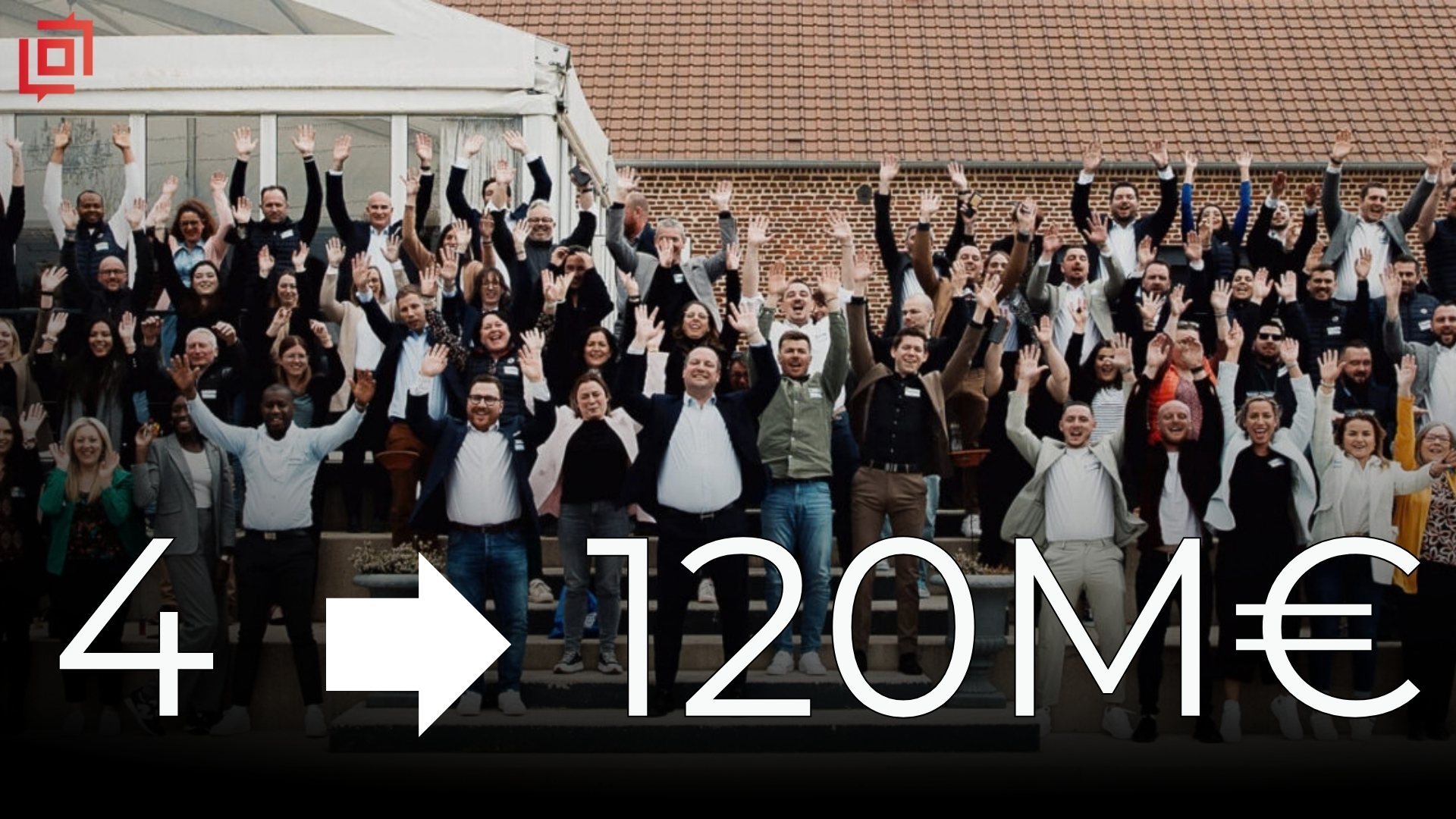
EUR 4m to 120m: the NSI case study

How to grow thirtyfold in six years through acquisitions.

Earn-outs in M&A: the complete guide for SME deals

An earn-out is a mergers and acquisitions (M&A) mechanism under which part of the acquisition price is paid according to the future performance of the acquired business. It reduces valuation risk for the buyer while giving the seller the opportunity to receive additional value if the agreed business targets are met.

Vendor financing guide: how a seller loan funds part of a business acquisition

Vendor financing: how the seller funds part of the acquisition price

Understand how vendor financing works, its benefits and risks, and best practice for structuring secure financing when selling a business.
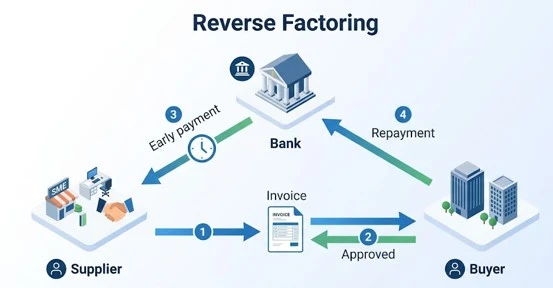
Reverse factoring

Reverse factoring explained: how supply chain finance improves your cash flow and your suppliers', how it works, what it costs and its benefits.

Instant business loans for SMEs: fast online financing in 24 to 72 hours

Instant business loans: how they work, costs and risks

Need finance fast? Learn how instant business loans work, their eligibility criteria, rates and the pitfalls to avoid.

Buying a distressed business: turnaround method, financing and execution

How to buy a distressed business: the Tapie turnaround method

Buying a distressed business can be highly profitable: the Tapie method explained step by step, with its value-creation levers.

NDAs and confidentiality in M&A

How to genuinely protect confidentiality in an M&A deal: NDAs, data rooms, best practice and the mistakes that cause a transaction to leak.

Invoice factoring explained

Invoice factoring explained: definition, how it works, costs and use cases for funding your cash flow by selling your customer invoices. The complete guide.

Buying an off-market business: benefits, risks and best practice

Buying an off-market business: what it means, how it compares with an adviser-led sale, passive vs proactive sourcing and the role of a buy-side adviser.

The letter of intent (LOI) in mergers and acquisitions

Letter of intent (LOI) in M&A: what it is, where it fits in the sale process, exclusivity, key clauses and how it differs from the SPA. A practical guide.

SPV Financing: Funding Your Business or Project

SPV financing explained: how a special purpose vehicle ring-fences risk, typical debt levels, set-up cost, timing and practical use cases by sector.

Corporate venture capital: an established company investing in innovative startups

Corporate Venture Capital

Corporate venture capital explained: how established companies invest in startups, the main forms of CVC, benefits, risks and when to choose acquisition.

How does a recession impact M&A deals?

Recession and M&A: how an economic downturn changes valuations, financing and negotiation, and how to turn it into an acquisition opportunity.

How to choose an M&A adviser for your deal

Choosing the right M&A adviser is decisive for a successful deal: selection criteria, fees and the questions to ask before signing an engagement letter.

Getting the human side of M&A right

People issues are often what makes mergers and acquisitions fail: company culture, communication and team integration are the keys to a successful transition.

How to succeed in a cross-border M&A deal

Cross-border acquisitions: the legal, tax and cultural differences to anticipate to secure an international M&A deal.

M&A software: why your company needs it

M&A software centralises deal flow, data rooms and deal tracking: why it is becoming essential for efficiency and security.

Digital M&A tools: data room, CRM, AI and automation

An overview of the new digital and AI tools transforming mergers and acquisitions, from deal sourcing to due diligence.

The M&A deal team: who to bring in and how to coordinate them

An M&A deal brings together owners, advisers and experts: why coordinating the deal team has a direct bearing on the success of the transaction.

How to increase your M&A deal flow

Grow your M&A deal flow: sourcing strategies, networks and tools to generate more qualified transaction opportunities.

Post-acquisition integration: 4 keys and a 100-day plan

Post-acquisition integration decides whether a deal succeeds: 4 practical keys to integrating your target and securing synergies.

How to evaluate an acquisition opportunity: strategic fit, due diligence, price and risk

How to evaluate an acquisition opportunity: the strategic, financial and valuation criteria that help you identify the right target and avoid bad deals.

Inorganic growth: levers, steps and risks of growing through acquisitions

Inorganic growth speeds up development through acquisition: benefits, financing options and the key success factors of a buy-and-build strategy.

Let's scope your project in a 30-minute call.
Reply within 24 business hours
IOBSP ORIAS no. 25000696
Thank you, your request has been received!
Oops! Something went wrong while submitting the form.
The information collected is used solely to process your meeting request. You have the right to access, correct and delete it — see our legal notice.

Business acquisition: making acquisitive growth work

Acquiring a business — through a buyout, acquisitive growth or a takeover of an existing company — speeds up development, opens a new market or brings in a key capability. Our articles detail the steps of a successful acquisition: targeting, approach, letter of intent (LOI), due diligence and completion.

Selling and passing on a business: maximising and securing the sale

Selling a business is a strategic step that is often prepared several years in advance. From valuation to negotiation, including documentation and the tax treatment of the transfer, our insights help owners maximise the value of their company while securing the transaction.

Business finance: the levers to fund your projects

Acquisition, expansion, working capital: each project calls for a suitable financing solution. Our experts explain the main levers available to business owners.

Financing a buyout or acquisitive growth

SPV structure, senior debt, mezzanine debt or vendor financing: we explain how to structure acquisition finance and use leverage.

Financing the operating cycle

Factoring, reverse factoring and cash management solutions: find out how to finance your working capital requirement and speed up collections.

Fast and alternative finance

Instant loans and alternative finance let you seize an opportunity without delay. Estimate your options in a few minutes.

M&A methods and tools: valuation, due diligence and AI

Beyond the deals themselves, we share our method: valuation methods (DCF, multiples, adjusted net asset value), running a due diligence, legal structuring (SPV, warranties and indemnities — the French garantie d'actif et de passif) and the use of artificial intelligence to speed up your M&A analysis.

Frequently asked questions about business acquisition, sale and finance

What is the difference between an acquisition and a merger?

In an acquisition, one company buys another, which becomes a subsidiary or ceases to exist: control changes hands. In a merger, two companies combine into a single entity, either a new one or the absorbing company. An acquisition sets a buyer against a seller, whereas a merger aims at a more balanced combination of the two businesses.

Icon - Elements Webflow Library - BRIX Templates

How is a business valued before a sale?

Three main families of methods coexist: the asset-based approach (adjusted net asset value), the cash-flow approach (discounted cash flow, or DCF) and the market approach using multiples (comparison with comparable transactions or listed companies). In practice, several methods are cross-checked to establish a valuation range.

Icon - Elements Webflow Library - BRIX Templates

What is a letter of intent (LOI) in M&A?

The letter of intent (LOI) sets out a buyer's interest and the main terms of the deal: indicative price, scope, timetable, exclusivity and conditions precedent. Usually non-binding on the final price, it frames the due diligence and negotiation phase before the definitive agreement is signed.

Icon - Elements Webflow Library - BRIX Templates

What is an SPV and what is it used for in a buyout?

An SPV (special purpose vehicle) is a company set up specifically to carry a transaction, such as the acquisition of a business. It ring-fences the acquisition debt, brings several investors together and optimises the structure — in particular the leverage effect in an LBO.

Icon - Elements Webflow Library - BRIX Templates

How do you finance the acquisition of a business?

Acquisition finance usually combines an equity contribution, bank debt (senior debt), sometimes mezzanine debt and vendor financing. The structure often relies on leverage through an SPV. The right mix depends on the size of the deal, the target's debt service capacity and the buyers' profile.

Icon - Elements Webflow Library - BRIX Templates

What are factoring and reverse factoring?

Factoring allows a company to sell its customer invoices to a factor and be paid immediately, without waiting for the due date. Reverse factoring (supply chain finance) is initiated by the buyer: it lets its suppliers be paid quickly while preserving the buyer's own cash. Both finance working capital requirements.

Icon - Elements Webflow Library - BRIX Templates

How long does a business sale or acquisition take?

An M&A transaction generally takes 6 to 12 months from the first discussions to completion, depending on the complexity of the deal, the quality of preparation and the length of due diligence. Upstream preparation (valuation, documentation, legal housekeeping) may start several years before the transaction.

Icon - Elements Webflow Library - BRIX Templates
Demandez un rendez-vous confidentiel

Un premier échange de 30 minutes avec un associé pour cadrer votre projet de cession, d'acquisition ou de financement — sans engagement.

  • Reply within 24 business hours

  • Confidentiality guaranteed — NDA on request

  • IOBSP broker registered with ORIAS under no. 25000696

The information collected is used solely to process your meeting request. You have the right to access, correct and delete it — see our legal notice.

Thank you! Your request has been received.
Something went wrong while sending. Please try again or email us at assistance@collaborationcapital.org.